MOSAIC significantly expands its sports pilot training in the USA

The FAA has adapted the training and the rights of the US Sport Pilot Certificate to the new MOSAIC regulations. The previous close connection to classic two-seat light sport aircraft with low weight limits is thus largely history. In the future, sport pilots will also be able to fly many larger and more powerful aircraft and be trained for them – including, under certain conditions, four-seat models such as the Cessna 172 or numerous Piper PA-28 variants. At the same time, the training requirements remain the same.

3rd October 2026

Flight medicine at the LBA: DAeC collects cases of lengthy procedures and missing decisions

The German Aero Club is intensifying its efforts to improve the speed and clarity of aviation medical procedures at the Federal Aviation Administration. After pilots have been reporting for years about long processing times, missing feedback, and difficult-to-understand workflows, problematic cases are now to be recorded centrally and in a structured manner. The goal is explicitly not to handle individual medical procedures, but to identify recurring structural problems. The initiative builds on a debate that has been ongoing for years, in which associations have already submitted petitions, held discussions with the Federal Aviation Administration, and submitted complaints to the German Aviation Safety Agency.

3rd October 2026

Avionik Straubing: Three long-serving employees take over the traditional company

A new era is beginning at Avionik Straubing. Martin Scheifl, Josef Breu and Stefan Schönsteiner have acquired the renowned avionics business from the previous owners, Iris and Gunter Hemmel. All three have been with the company for many years and together bring around 100 years of experience at Avionik Straubing. For customers, the management buyout is likely to mean continuity above all. At the same time, the new owners want to further develop the range of services and, in particular, integrate mechanical work more closely with

6th September 2026

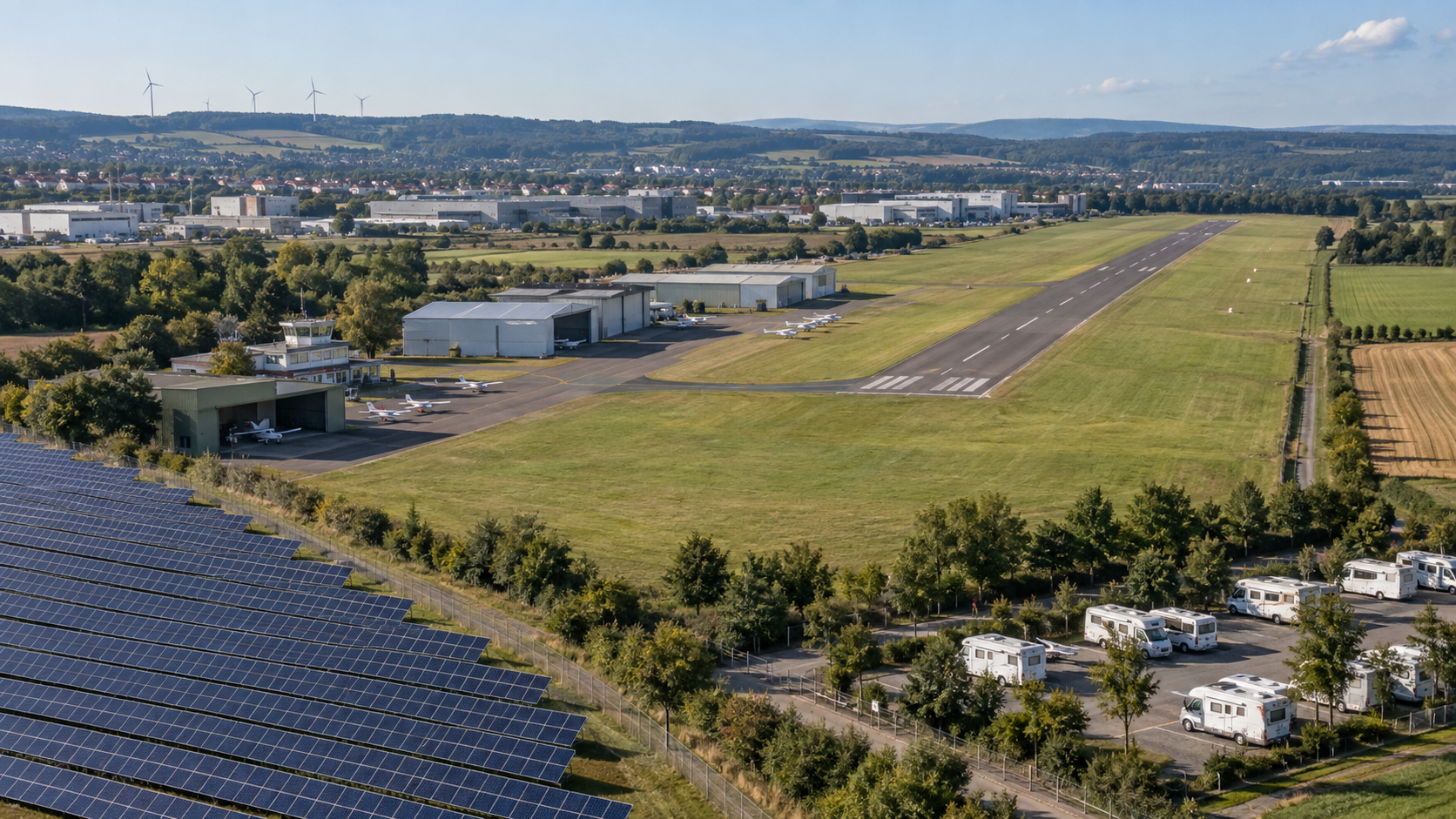
The death of airfields in Germany: When valuable infrastructure gives way to other uses

Germany's network of commercial and special landing grounds is coming under increasing economic and political pressure. Municipal owners are questioning deficits, while alternative uses such as photovoltaics, commercial areas or camper van sites often promise higher and more predictable revenues. Several former airfields have already been repurposed. At the same time, examples like Offenburg or currently Wyk auf Föhr show that this trend does not necessarily have to continue. For general aviation, this is about much more than individual runways: with every

6th September 2026

More military restricted areas: flight preparation is becoming more important for GA pilots

The security policy situation in Europe is increasingly having an impact on general aviation in Germany as well. More military flight operations, additional drone exercises and the protection of sensitive Bundeswehr facilities mean that new or temporary restricted areas can be established. For VFR and IFR pilots, this means one thing above all: the airspace structure can change at shorter notice and in smaller areas than before. What is particularly critical is that unauthorised entry into an active restricted area is not merely

6th September 2026

IFR clearance via app: FAA brings Mobile Clearance to general aviation

With „Mobile Clearance“, the US aviation authority FAA is testing a new procedure that allows pilots to receive their IFR departure clearance directly via flight planning apps such as ForeFlight or Garmin Pilot. Long clearances no longer have to be copied down and read back exclusively via radio or telephone. This is intended to avoid transmission errors, relieve congestion on frequencies and at the same time reduce the workload for pilots and air traffic controllers. Following initial tests in the Houston area, the system is currently being expanded to further airports. For

16 August 2026

EASA simplifies noise certification of light propeller-driven aircraft

The EASA has released ENCODE, a new free tool for the noise certification of light propeller-driven aircraft. The Excel-based tool evaluates measurement data in accordance with the specifications of ICAO Annex 16, checks individual measurement flights for plausibility and performs a large proportion of the required calculations. For manufacturers and design organisations, this can significantly simplify the preparation for noise approval. However, the actual noise measurements and the prescribed test report are still required.

16 August 2026

No fixed deadline for TEL: Avgas 100LL likely to remain available for longer

For general aviation, the supply of Avgas 100LL is in the clear for the time being. Innospec, the world's last established manufacturer of tetraethyllead (TEL), has clarified that there is currently no fixed date for stopping the production of the lead additive. The company is thus qualifying earlier expectations that TEL production could end around 2030. This is of great significance for operators of high-performance piston-engined aircraft, as numerous engines still rely on high-octane

15 August 2026

Carbon Cub ULT: First microlight aircraft with turbine engine marks the beginning of a new generation.

With the introduction of the Carbon Cub ULT, US manufacturer Cub Crafters is setting a remarkable milestone in the development of light sport aircraft. For the first time, an ultralight aircraft combines a modern turboprop engine with the new, significantly expanded certification possibilities of the American MOSAIC reform. The new Carbon Cub ULT combines classic STOL characteristics with state-of-the-art engine technology and could mark the beginning of an entirely new generation of aircraft. Even though the concept is initially aimed exclusively at the US market, it is likely

19 July 2026

Italy Tightens Controls for Private Aircraft: What Pilots Should Now Be Aware Of

Italy is currently developing into one of the most demanding destinations for private aircraft operators within Europe. Increased checks by the Italian financial police are increasingly leading to holders of foreign-registered or company-owned aircraft in particular facing extensive inspections, significant financial demands, and in some cases even the temporary seizure of their aircraft. The background to this is a luxury tax for private aircraft that has existed for years, the enforcement of which has now been significantly intensified. The European IAOPA

19 July 2026

Border crossing to Denmark: Flight plan requirement introduced for many popular destinations

A long-standing special arrangement for cross-border visual flight traffic between Germany and Denmark is largely a thing of the past. While private pilots were able to fly to numerous Danish airfields for decades without a flight plan, this is now only possible in a few exceptional cases. The change particularly affects popular destinations in Danish South Jutland and along the Baltic coast. Even though modern flight plan apps limit the practical impact, the new regulation marks the end of a traditional simplification in German-Danish air traffic.

22 June 2026

MOGAS Map Germany 2026 Updated: Key Guide for UL and Private Pilots Further Improved

The popular MOGAS map of Germany has been released in a new edition for 2026. With numerous updates and newly registered fueling options, it offers valuable assistance for flight planning to private pilots, ultralight pilots, and owners of aircraft with Otto engines. In light of rising fuel prices, the gradual transition to unleaded fuels, and the ongoing discussion about the future of AVGAS, an overview of available MOGAS filling stations is becoming increasingly important. The project, maintained by volunteers, impressively demonstrates,

22 June 2026

Plane crash in snowstorm: how bad decisions led an experienced crew to disaster

Most general aviation accidents are not caused by technical defects, but by a chain of human factors. A tragic accident involving a Cessna 177B near Burg Feuerstein impressively illustrates this. Despite many years of flying experience, the pilot encountered wintry weather conditions on a return flight that deteriorated significantly more than expected. Several wrong decisions, insufficient weather preparation, and adherence to the original flight plan ultimately led to the loss of control and the aircraft's crash. The case shows

5 June 2026

Fear of flying in pilots: the underestimated taboo subject of general aviation

When we talk about fear of flying, most people think of passengers. However, pilots can also be affected by anxiety – even after many years of flying experience and thousands of flight hours. Although this topic is rarely openly discussed in aviation, it plays an important role in flight safety and personal well-being. Fear of flying in pilots often arises after stressful experiences, but can also develop gradually due to changing life circumstances, a lack of flying practice, or increasing

5 June 2026

Lufthansa Dreamliner damaged in Frankfurt: nose landing gear collapses at the gate

An unusual incident caused a stir at Frankfurt Airport at the beginning of June. A Lufthansa Boeing 787-9, which had only been in service for a short time, suddenly nosedived while being prepared for departure at the gate. The nose landing gear buckled, causing significant damage to the forward fuselage. Several crew members and ground staff sustained minor injuries. The incident raises questions about the technical cause and again highlights the high stresses to which modern aircraft are subjected.

5 June 2026

New ICAO requirements for wind turbines near airfields: flight safety takes centre stage

With the release of the third edition of the ICAO's „Airport Services Manual – Part 6: Control of Obstacles“, the International Civil Aviation Organization is setting new standards for the assessment of obstacles in the vicinity of aerodromes. Wind turbines in particular are a key focus. The new guidelines no longer consider only the physical height of structures, but also their impact on flight procedures, turbulence, navigation systems, and the long-term development of aerodromes. The regulations are likely to lead globally to a

5 June 2026

Starlink makes internet in the cockpit more expensive: General aviation fears a step backwards in digital connectivity

Starlink's satellite internet service has also garnered considerable attention in general aviation in recent years. In particular, the compact Starlink Mini system has enabled many private pilots to access broadband internet on board for the first time at a comparatively affordable price. However, new tariff structures and significant price increases are now causing dissatisfaction within the international pilot community. General aviation associations fear that a promising technology will become economically unattractive for many private pilots, thus hindering the digital development of

5 June 2026

Well prepared for abroad: What documents private pilots really need

International flights with your own aircraft are among the greatest freedoms of general aviation. Within Europe, many hurdles have fallen due to common regulations and open borders, yet a number of formal requirements remain. From the correct licence and radio permissions to entry regulations and practical matters such as fuel cards – anyone wishing to fly across borders should carefully check their documents. Good preparation not only avoids legal problems but also ensures a

3 May 2026

Back in the air faster: Continental speeds up engine changes in general aviation

With a new programme for accelerated exchange engine provisioning, Continental Aerospace Technologies is responding to a central problem in general aviation: long downtime during engine overhauls. The so-called FastTrack Engine Programme allows operators to replace engines significantly faster and increase their aircraft's operational readiness. This approach is exemplary of a development towards more efficient maintenance processes and more service-oriented business models in aviation.

3 May 2026

AERO Friedrichshafen 2026: Record numbers, new impetus, and a strong signal for General Aviation

This year, AERO Friedrichshafen impressively established itself as the world's leading platform for general aviation. Benefiting from exceptionally good general conditions and structural changes in the international trade fair calendar, the event achieved new record highs for exhibitors and visitors. In addition to the strong presence of business aviation, innovation themes, promotion of young talent, and intensive dialogue with authorities particularly characterised the trade fair. Overall, AERO sent a clear signal of dynamism and future viability.

3 May 2026

Stable supply of AVGAS, uncertainty for JET A-1: General Aviation fuel market under geopolitical influence

Geopolitical tensions in the Middle East are increasingly impacting global energy markets, with noticeable effects also for General Aviation in Europe. While the supply of AVGAS currently remains stable and no short-term shortages are apparent, a considerably more volatile development is evident for turbine fuel JET A-1. Market participants are increasingly focusing on diversifying procurement to mitigate risks. Overall, this presents a nuanced picture, offering both reassurance at

3 May 2026

Switzerland liberalises aviation rules: abolition of customs airport obligation and opening up for 600kg ultralight aircraft

Switzerland is facing a noticeable liberalisation of its aviation law framework. In the future, the obligation to mandatorily use customs airports for arrivals and departures will be removed. At the same time, the certification of ultralight aircraft with a maximum take-off mass of up to 600 kilograms will be permitted. Both measures aim to simplify cross-border flights, reduce regulatory hurdles, and bring general aviation more in line with European standards.

12 April 2026

Central access to aviation information: NfL now available digitally via the DFS portal

Aeronautical Information Circulars (NfL) are among the most important official publications for civil aviation in Germany. They contain binding regulations, safety-relevant notices, and operational information for pilots, air carriers, and other stakeholders. With a recent expansion of its online services, Deutsche Flugsicherung (DFS) is now providing the valid NfL free of charge via its AIP portal. This significantly simplifies access to key aviation-related information and brings it more in line with international standards.

12 April 2026

AERO 2026 in Friedrichshafen: New procedures and increased requirements for general aviation

AERO 2026 in Friedrichshafen will be one of the most important general aviation events in Europe. As in previous years, the expected high volume of traffic will lead to special operational measures. A recent DFS publication describes in detail new and adapted procedures for arrivals and departures, ground movements and helicopter operations. The article provides a comprehensive overview of the most important regulations, categorises them and shows what practical effects they will have.

28 March 2026

Frequency Monitoring Code (FMC) in the FIS: extended trial operation from April 2026

The flight information service (FIS) in Germany has been under increasing pressure for years: rising traffic figures, large sector sizes and limited personnel resources regularly lead to capacity bottlenecks. Against this backdrop, a new procedure - the so-called Frequency Monitoring Code (FMC) - was trialled for the first time in 2025 in a part of the FIR Langen. Following overwhelmingly positive feedback from the field, the trial operation will now be extended from April 2026. The following article explains the background, functionality and significance

28 March 2026

Autopilot in microlight aircraft: technology available, but usually not legally permissible

Today, modern microlight aircraft often have highly developed avionics systems, which in many cases are already prepared for the use of an autopilot. This equipment has long been standard on international markets. In Germany, however, the situation is more complicated: although the technology is available and could easily be integrated into many UL models, the operation of an autopilot in air sports aircraft is not currently permitted as a rule. This is due to national construction and authorisation regulations, which have so far

7 March 2026

Flight radio exam directly at the trade fair: Federal Network Agency offers BZF and AZF exams at AERO 2026

AERO Friedrichshafen is the most important general aviation trade fair in Europe. In 2026, the Federal Network Agency will once again be offering a special service for prospective and active pilots: During the days of the trade fair, visitors will be able to take the examination for various aeronautical radio licences directly on site. This makes the trade fair not only a meeting place for the industry, but also a practical venue for training and qualification. The initiative makes it easier for

7 March 2026

DFS modernises VOR infrastructure: DVOR technology increases robustness and supports energy transition

DFS Deutsche Flugsicherung has successfully completed a key infrastructure project: Four older CVOR beacons were replaced by modern, less interference-prone DVOR systems. The aim of the measure is to make the navigation infrastructure more robust against interference - particularly from wind turbines - and at the same time to enable the further expansion of renewable energies. The modernisation affects central locations in Germany and is part of a long-term strategy to stabilise the ground-based navigation infrastructure in the age of satellite-based procedures.

22 February 2026

Focus on aviation medicine: Round table at the Ministry of Transport puts pressure on the LBA to reform

Long processing times, a growing loss of trust and a dramatic decline in the number of aviation physicians - the situation in German aviation medicine is being heavily criticised. At a round table at the Federal Ministry of Transport in Bonn, representatives from politics, aviation authorities, associations and industry came together to discuss urgently needed improvements. The discussion revealed structural problems with far-reaching consequences for professional pilots, general aviation and the next generation of air sports enthusiasts. At the same time, there are initial signs that

22 February 2026

AERO 2026 in Friedrichshafen: Slot registration for approaching aircraft has started

AERO 2026 is casting its shadow ahead: from 22 to 25 April 2026, international general aviation will once again meet at Lake Constance. Pilots who would like to travel to the event in their own aircraft can now register for slot allocation. The tried-and-tested online system will once again allocate arrival and departure times in blocks. Those who plan in good time will not only secure a suitable slot, but will also benefit from the pilot package including a free day at the trade fair.

22 February 2026

No further contributions available.

Not a member yet? Register now: